
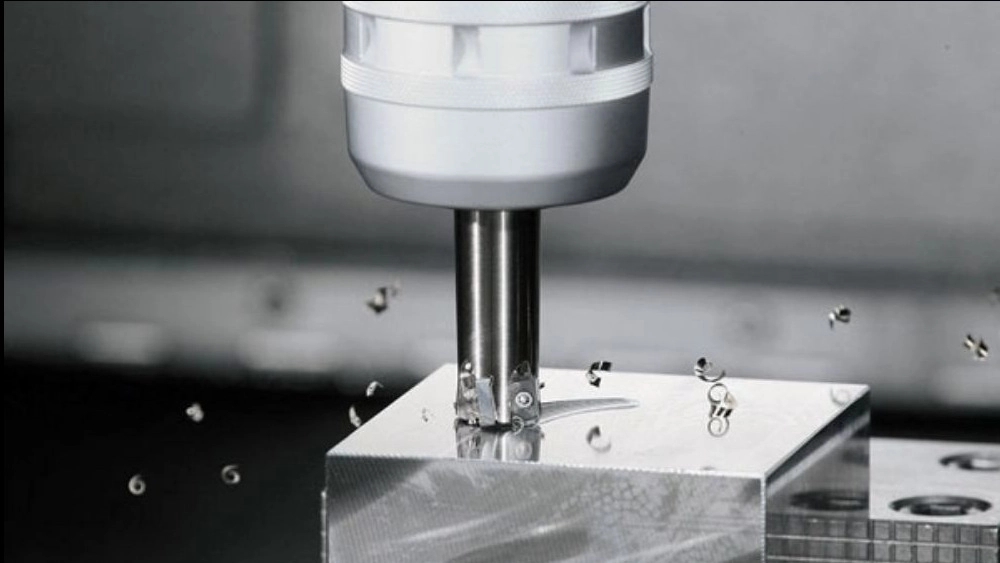
What is Milling?
Milling is the removal of workpiece surfaces by rotating multi-edged tools, called milling blades. In this method, like drilling, the tool has a rotational movement, the work piece is fixed on the machine table with the appropriate method, and you can perform the chipping operation on the work piece.
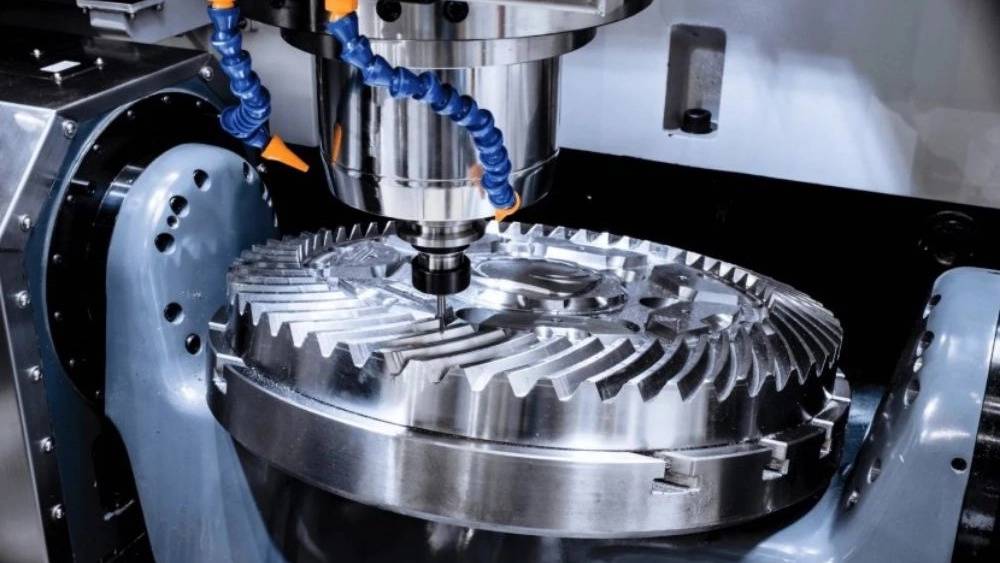
One of the machines used to produce flat, horizontal, vertical, inclined and shaped surfaces is a milling machine. Also, straight and spiral grooves and gears can be made with these devices. The milling machine is made in various types.
Milling history
Since not all production parts have rotating surfaces that can be produced by turning method, the necessity of using parts with different geometry and having straight, inclined and shaped surfaces, etc., in the industry, prompts people to Think of a method that can perform the shaving of the desired surfaces. This feeling of need led to the construction of the first milling machine.
Types of milling machines
Horizontal milling machine
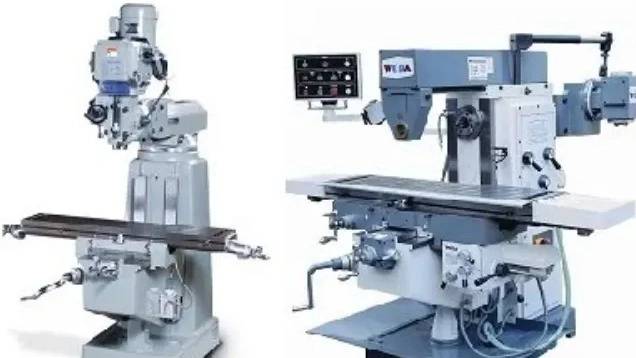
The most important characteristic of this type of machine is the horizontal axis of the tool holder of this machine, and in this way, they are able to machine various parts. milling blade and as a result of providing the appropriate cutting speed, the machine has a main gear box that receives its movement from an electric motor. The different parts of the horizontal milling machine can be seen in the figures below. The mechanism of longitudinal, transverse and vertical movement of the table is possible by means of screws and also automatically.
Vertical milling machine
Due to the fact that the tool holder axis of these devices is vertical, they are known as vertical milling devices. In this way, this type of machine is capable of machining various parts. Due to the fact that the axis of the tool holder of these machines is vertical, they are known as vertical milling machines. In this way, this type of machine is able to machine different parts.
Universal milling machine
These devices have a vertical and horizontal work axis, and its structure is similar to a horizontal milling machine, and usually the table of these devices can be deviated about 40 degrees to the left and right. In this type of device, the movement of the guide rod of the table is transferred to the dividing device through interchangeable gears and enables the rotational movement of the work piece at the same time. In this way, in addition to normal work, grooves, gears, milling cutter blades and spiral gears as well as spiral gears can be made with their help. The FP4M milling machine is a universal milling machine (this machine has a universal and tiltable table that can replace a regular table).

Milling car components
1) Body of the device
It is usually made of cast iron and casted, and different parts of the car are mounted on it.
2) gearbox
This car has two separate gearboxes, as follows:
A) Gear box for main axis rotation with 18 different speeds with magnetic brake, to adjust the speed, first pull the middle plate back and then turn the speed adjustment drum until it is in the upper part. Then release the middle ring. The arrow symbol indicates the adjustment period.
b) Special gearbox for longitudinal, transverse, height advancement speed along with rabbit movement (fast). To adjust the forward speed, pull the ring back and then turn the adjusting knob until the desired number is at the top. The number in front of the index is the amount of adjustment advance.
3) Table
The table of the machine has a longitudinal, vertical displacement, and the transverse displacement by the slide that is in the upper part of the device, moves the axis of the tool. Longitudinal, transverse and vertical movements are possible manually and automatic movement in X and Z directions. In addition to the vertical movement of the table, the axis of the tool also has a vertical movement in short distances, which provides the possibility of manual drilling like a column drill.
4) The device's cushion
Vertical milling axis closed on it will be Kalgi has the ability to rotate around the horizontal axis, which enables milling of inclined surfaces. Meanwhile, the axis of the milling cutter is moved by the vertical movement handle by 90 mm.
5) Lubrication system
A) It can be adjusted centrally and automatically, which is done through the control systems of the electrical panel in the direction of Kalgi, and its oil supply is from the main gearbox.
b) It is done manually by a central hand pump for longitudinal and height rails, its oil is fed by a tank installed next to the device.
6)
The cooling system whose reservoir is provided in the floor and base of the machine and is transferred to the chipping place by a pump and hose, and its consumption can be controlled with the adjusting valve.
7) Control panel
With this board, you can control cutting movements, automatic slow and fast, magnetic brake, cooling system. This board is equipped with a consumption current intensity display.
The coolant can be controlled by the key.
By using the key in two modes, slow (|) and fast (||), you can set a different period for the work axis.
Axis brake key that keeps the milling axis when turning off the machine. If the switch is in the off position, the device will not turn on.
For fast transfer when moving without load, the fast moving key (Rabbit) is used.
The advance movement can be made slow and fast with the help of the built-in keys, and the progress of the device can be stopped temporarily with the help of the advance step key.
نویسنده پست
5695
مقاله
مطالبی که در این پست مطالعه میکنید
What is Milling?
Milling history
Types of milling machines
Horizontal milling machine
Vertical milling machine
Universal milling machine
Milling car components
3) Table
4) The device's cushion
5) Lubrication system
6)
7) Control panel